

Narikala Fortress Tbilisi: History, Views & Visitor Tips
Everything you need to know about Tbilisi's ancient hilltop fortress — from its 4th-century origins to the best views over the city, how to get there by cable car, and the practical tips that will make your visit memorable.
Narikala Fortress is the oldest and most iconic landmark in Tbilisi — a crumbling stone fortress perched on a hill above the Old Town, watching over the city for more than 1,600 years. This Narikala Fortress guide covers everything you need to know: the history, the best viewpoints, how to get there, and the practical tips that will make your visit smoother.
Whether you are a history buff, a photographer, or just looking for the best view in Tbilisi, Narikala is unmissable. Additionally, if you are still planning your wider trip, start with our complete Tbilisi travel guide.
Narikala Fortress at a Glance
Founded
4th century AD
Location
Old Town, Tbilisi
Entry
Free (cable car extra)
History of Narikala Fortress
Narikala was built in the 4th century AD, during the reign of King Vakhtang Gorgasali, the founder of Tbilisi. Originally called Shuris-Tsikhe ("Envious Fortress"), it served as a defensive citadel protecting the city from invaders. Over the centuries, it was expanded and rebuilt by Persians, Byzantines, Arabs, and Georgians — each leaving their mark on its walls.
The fortress was heavily damaged by an earthquake in 1827, and much of what you see today is partially restored. However, the original stone walls and towers still stand, giving visitors a tangible sense of Tbilisi's long and turbulent history. Moreover, the fortress is included in the UNESCO tentative list of Georgian heritage sites.
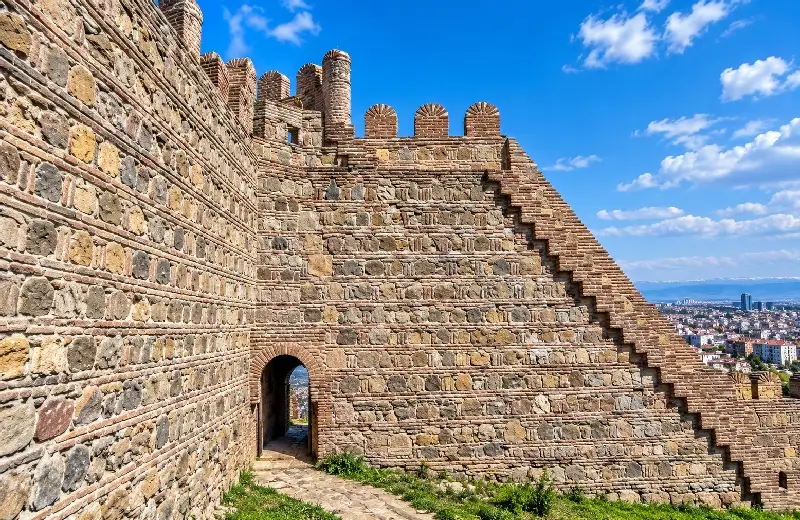
The Ancient Walls
The surviving stone walls and towers date from various periods — some sections are over 1,500 years old. Walking along the ramparts gives you a sense of how the fortress once defended the city below.
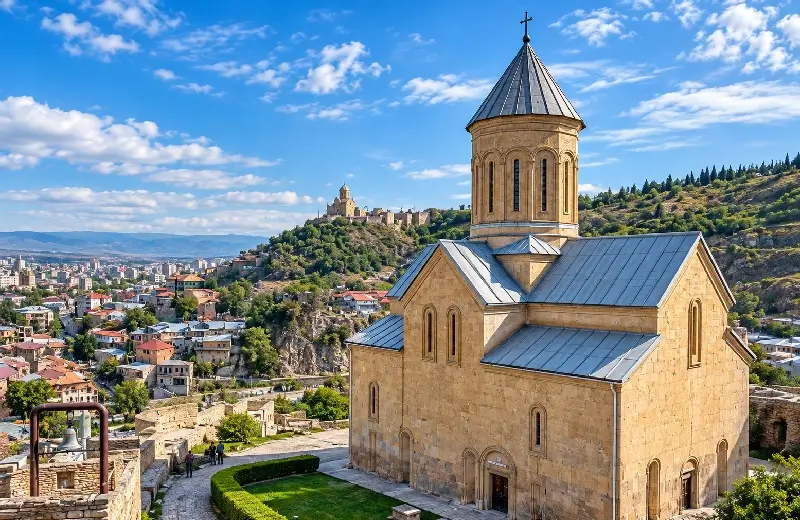
St. Nicholas Church
A small church inside the fortress, rebuilt in the 1990s on the site of an older structure. The interior is decorated with colorful frescoes, and the church offers a quiet contrast to the busy viewpoints outside.
The Best Views from Narikala Fortress
Narikala offers the best panoramic view of Tbilisi — the Old Town with its colorful balconies, the Kura River winding through the city, the Bridge of Peace, and the hills beyond. On a clear day, you can see the entire city spread out below, and at sunset the view becomes truly unforgettable.
The main viewpoint is near the cable car station, but the best spot is actually a few minutes walk along the fortress walls. Meanwhile, the walking path down toward the Old Town passes several smaller lookout points that are quieter and equally photogenic.

Panoramic City View
The classic view of Tbilisi from the fortress — the Old Town, the river, and the surrounding hills. Best in the late afternoon, when the light turns golden.
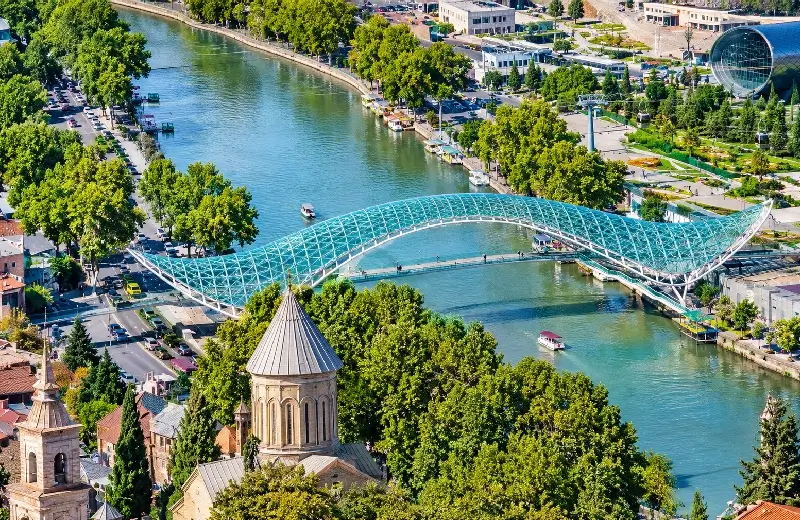
The Bridge of Peace
The modern Bridge of Peace is particularly striking from above — the glass-and-steel structure looks like a wave over the river. Moreover, its illumination at night is a spectacle in itself.
How to Get to Narikala Fortress
There are three main ways to reach the fortress: the cable car, walking, or taxi. The cable car is the most popular option — it is quick, cheap, and offers its own spectacular views of the city during the ride.
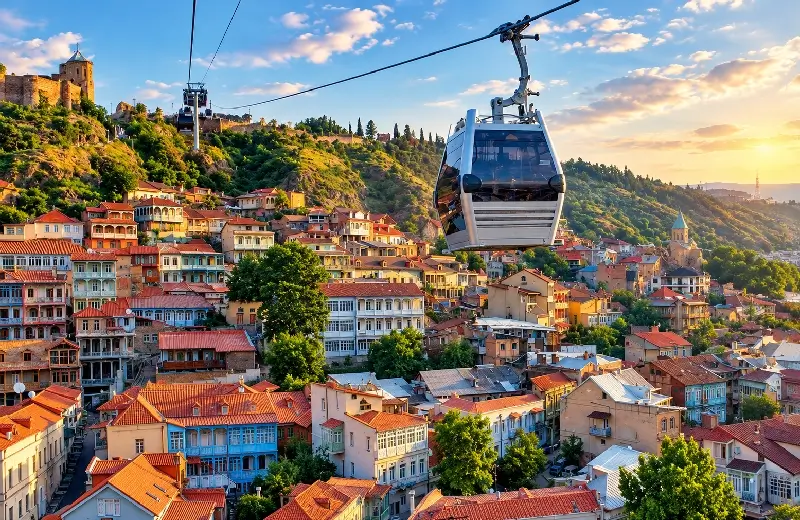
By Cable Car
The cable car runs from Rike Park to the fortress and takes about 2 minutes. A one-way ticket costs 2.5 GEL with a Metromoney card. The views during the ride are worth the trip alone.
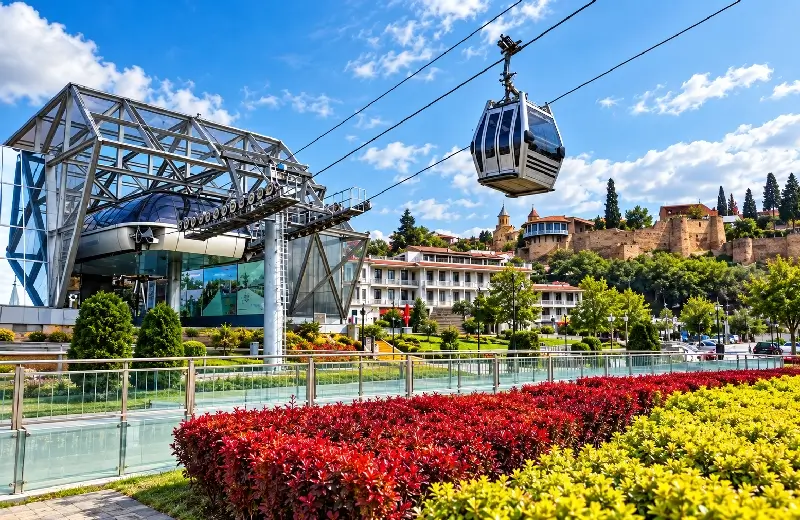
Rike Park: The Starting Point
Rike Park is at the foot of the fortress on the east bank of the Kura River. The cable car station is easy to find, and the park itself is worth a short stroll before or after your visit.
By Foot
If you prefer to walk, several paths lead up to the fortress from the Old Town. The most popular route starts near the sulfur baths and takes about 20–30 minutes — it is steep and uneven, but the views along the way are rewarding. Therefore, wear comfortable shoes and bring water, especially in summer.
Nearby Attractions
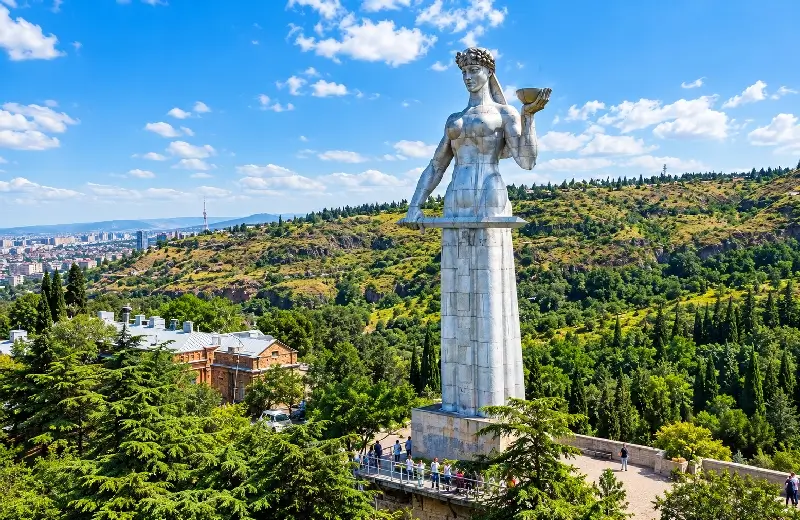
Kartlis Deda (Mother of Georgia)
A 20-meter aluminum statue of a woman holding a sword and a bowl of wine, symbolizing Georgia's readiness to defend and welcome. It is a short walk from the fortress and offers another great viewpoint.
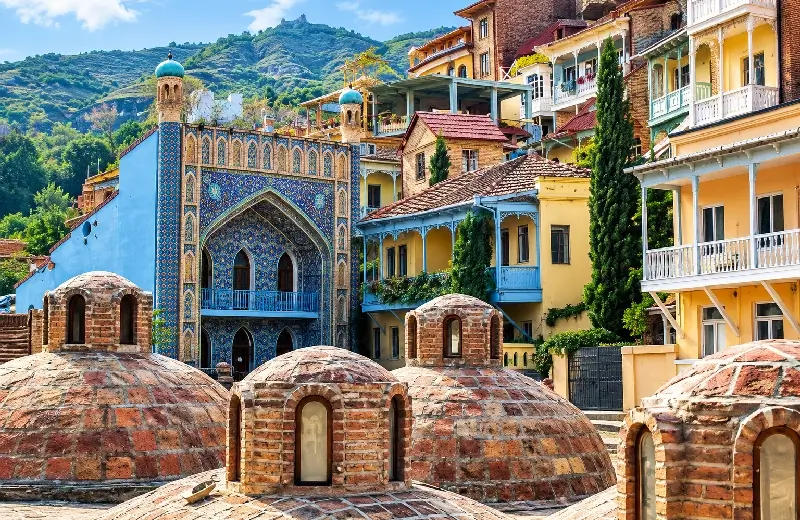
Tbilisi Old Town & Sulfur Baths
The historic Abanotubani district, with its domed sulfur baths, is right below the fortress. After your visit, walk down to explore the old streets, cafes, and the famous bathhouses.
Best Time to Visit Narikala Fortress
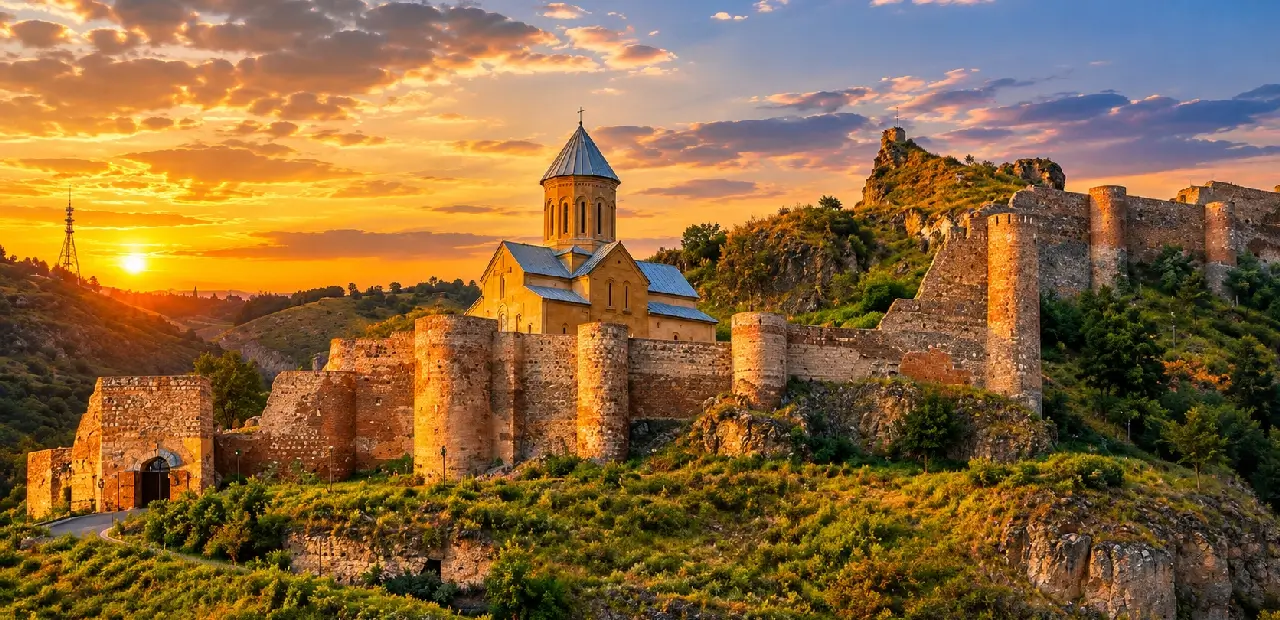
Sunset — The Best Time
The fortress is spectacular at any time of day, but sunset is when it truly shines. The city below turns gold, then pink, then blue, and the lights of the Old Town begin to appear. Arrive about 30–45 minutes before sunset to secure a good spot, and stay until the lights come on.
Morning is also beautiful — quieter and cooler — while midday can be hot and crowded, especially in summer. Moreover, if you visit in July or August, consider going early in the morning or late in the evening to avoid the heat.
Essential Tips for Visiting Narikala
Wear Good Shoes
The paths around the fortress are steep and uneven. Comfortable shoes make a big difference, especially if you walk up from the Old Town.
Get a Metromoney Card
The cable car only accepts the Metromoney card (2.5 GEL). You can buy one at the station or at any metro station. As a result, it is worth getting one for your whole trip.
Bring Your Camera
Narikala is one of the most photogenic spots in Tbilisi. Furthermore, the light changes dramatically through the day — sunset is the best time for photos.
Avoid Midday in Summer
The fortress has little shade, and Tbilisi summers can be intense. Therefore, visit in the early morning or late afternoon to avoid the heat.
Combine with Sulfur Baths
The Abanotubani sulfur baths are right below the fortress. Combine your visit with a soak in the baths — a perfect Tbilisi day.
Visit at Night Too
The fortress is illuminated at night, and the view of the lit-up city is spectacular. However, the cable car may close earlier, so check the schedule.
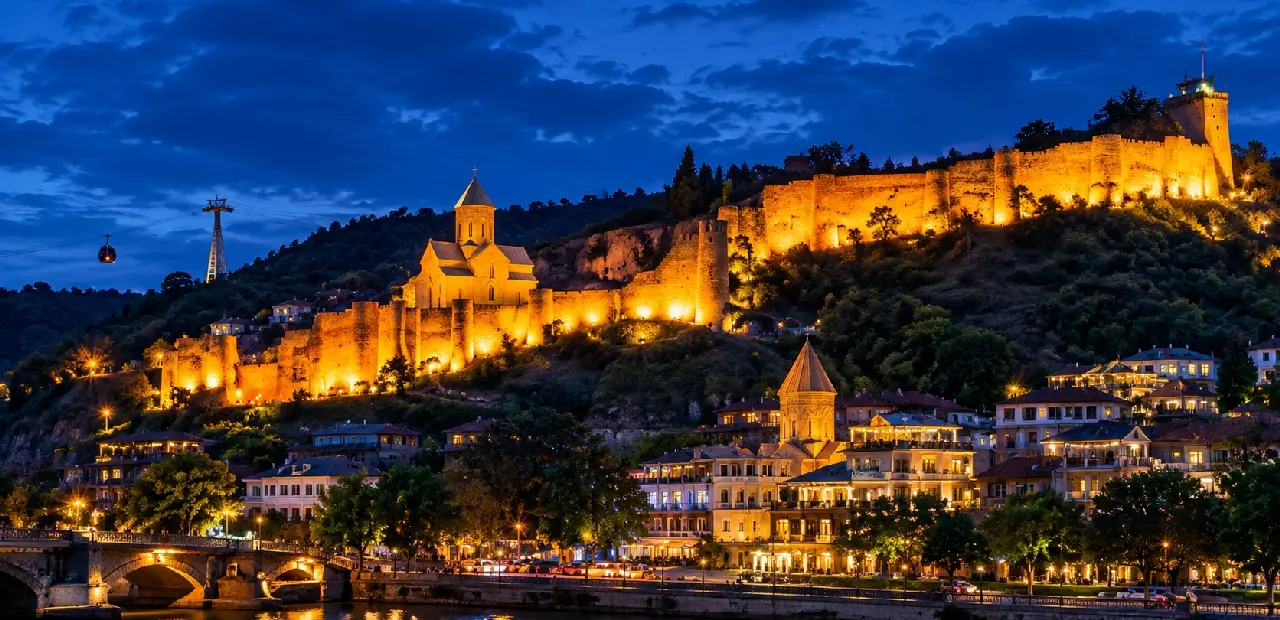
Narikala at Night
The fortress is beautifully illuminated after dark, and the view of Tbilisi's lights from above is one of the most memorable experiences in the city. If you are staying in Tbilisi overnight, consider a night visit — the atmosphere is completely different from the daytime.
Frequently Asked Questions
Yes — entry to the fortress itself is free. However, the cable car costs 2.5 GEL per ride (one-way) and requires a Metromoney card. The walking paths up to the fortress are also free.
The easiest way is by cable car from Rike Park (2 minutes, 2.5 GEL). You can also walk up from the Old Town (20–30 minutes) or take a taxi to the top. The cable car offers the best views during the ride.
Sunset is the best time — the city turns gold and the lights come on as you watch. Morning is also beautiful and quieter. Avoid midday in summer, when the fortress has little shade and can be very hot.
Plan for 1–2 hours at the fortress itself. Add another 30–45 minutes if you walk up from the Old Town, or 15 minutes for the cable car ride. If you combine it with the sulfur baths or the Mother of Georgia statue, allow half a day.
Yes, but with caution. The paths are steep and uneven, and some sections have low walls. Keep an eye on young children, especially near the edges. The cable car is a fun experience for kids.
Inside the fortress you will find the St. Nicholas Church (rebuilt in the 1990s with frescoes), the ancient stone walls and towers, and several viewpoints. There are no restaurants or shops inside — bring water and snacks if you plan to stay long.
Ready to Explore Narikala Fortress?
Book a guided Tbilisi tour or find the perfect hotel for your adventure.
Book Tbilisi Tour Explore Hotels