

Khinkali Guide: What It Is, How to Eat It & Where to Try It
Everything you need to know about Georgia's most famous dish — from the right way to eat a khinkali without burning yourself to the best places to try it in Tbilisi, Kazbegi, and beyond.
Khinkali is Georgia's national dish — a large, twisted dumpling filled with spiced meat and hot broth, eaten by hand and washed down with wine or chacha. It is not just a meal; it is a social ritual, a test of technique, and one of the most memorable food experiences you will have in the country. This khinkali guide covers everything you need to know — what it is, how to eat it properly, the different types, and where to try the best ones.
Whether you are planning your first trip to Georgia or you have already fallen in love with the cuisine, this guide will help you enjoy khinkali the way locals do. If you are still planning your wider trip, start with our complete Georgia travel guide.
Khinkali at a Glance
Type
Soup dumpling
Origin
Georgian mountain regions
Best Paired With
Red wine or chacha
What Is Khinkali?
Khinkali is a large dumpling made from a simple dough of flour, water, and salt, filled with a mixture of minced meat, onions, and spices, and sealed with a distinctive twisted top. The filling is raw when the dumpling is assembled, and the cooking process — boiling in water — creates a rich, flavorful broth inside the dough. This is what makes khinkali different from other dumplings: when you bite into it, you get both the meat and the hot soup in one mouthful.
The dish originated in the mountain regions of Georgia — particularly Svaneti and Khevsureti — where it was traditionally made with lamb or beef. Today it is found everywhere in the country, from high-end restaurants in Tbilisi to small family kitchens in the villages. The name comes from the Georgian word khinkali, which is related to the Persian khinkal, a similar dumpling found across the Caucasus.
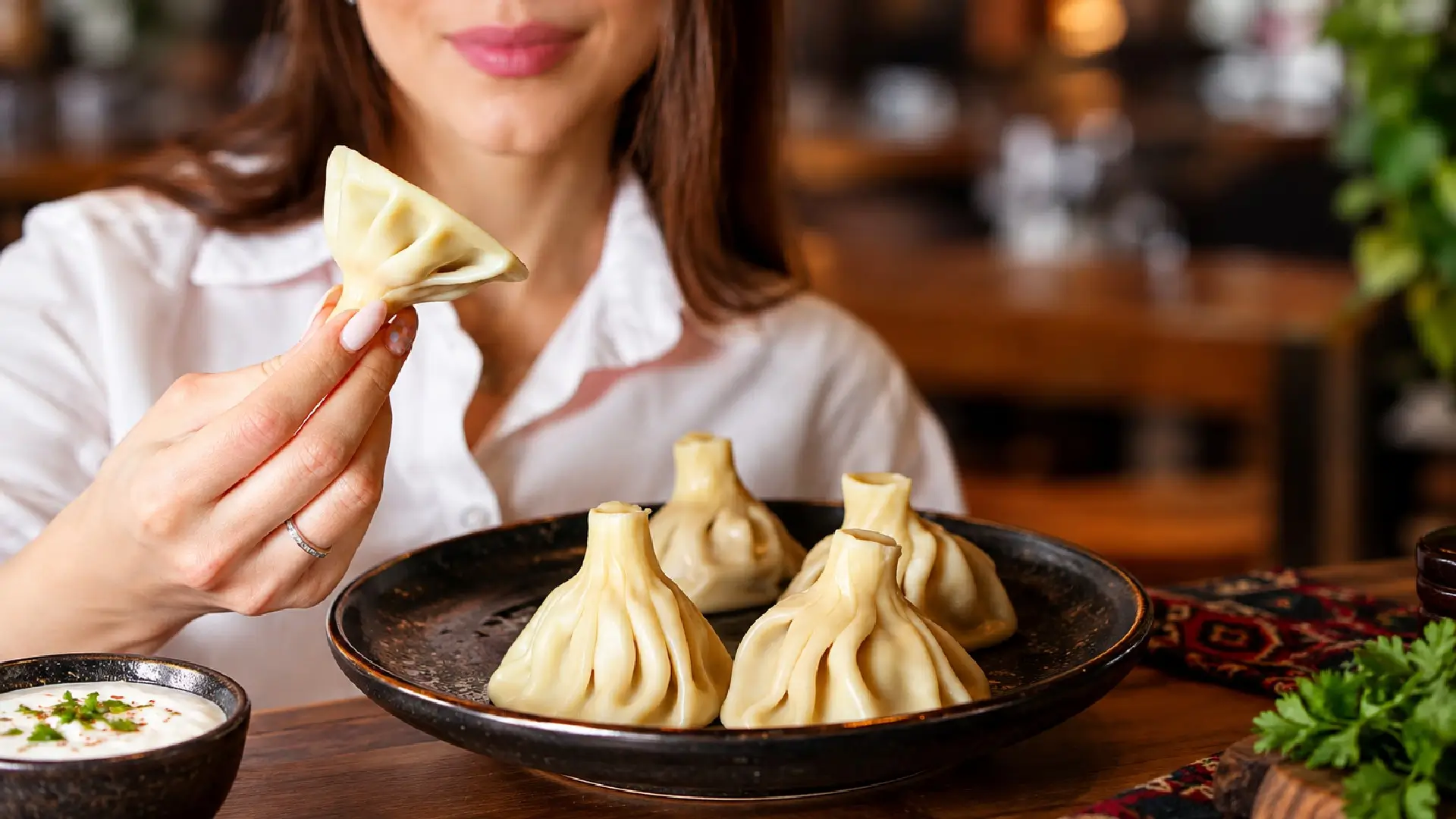
The Anatomy of a Khinkali
A properly made khinkali has around 19 pleats — a mark of the cook's skill. The top is twisted into a small "handle" that you hold while eating. The dough is thin enough to be tender but thick enough to hold the broth without breaking. The filling is usually a mix of beef and pork, seasoned with onion, garlic, and herbs, though lamb, cheese, and mushroom versions are also common.
How to Eat Khinkali (Without Burning Yourself)
Eating khinkali is a technique, and getting it right takes a little practice. The first rule is: never use a fork and knife. Khinkali is eaten by hand, and the ritual is part of the experience. Here is how locals do it.

Hold It by the Top
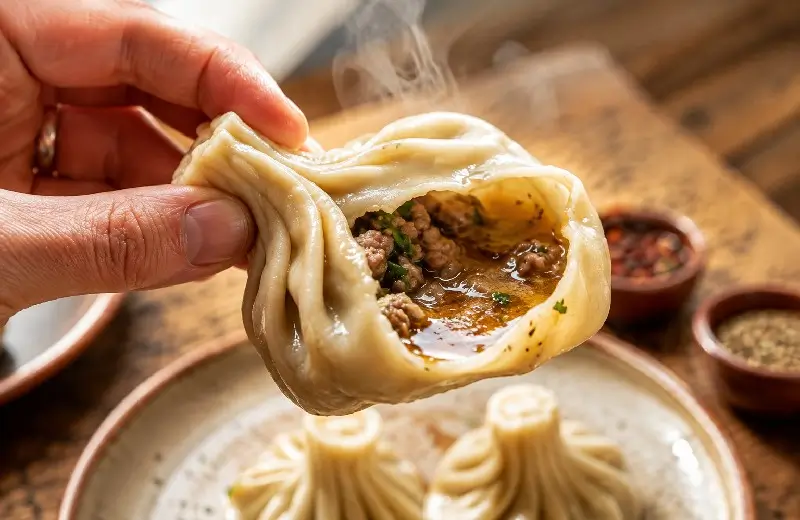
Pick up the khinkali by the twisted top — the "handle" — with your fingers. This part is not eaten; it is there to hold the dumpling without breaking the dough. Tilt it slightly so the broth stays inside.
Bite, Sip, Then Eat
Take a small bite from the side to release the steam, then sip the broth before eating the rest. This is the moment that makes khinkali special — the hot, savory soup inside the dumpling is the whole point.
Once you have sipped the broth, eat the rest of the dumpling in one or two bites. The top — the twisted handle — is left on the plate; it is considered bad form to eat it, and locals will notice. A plate of khinkali is usually counted by the number of tops left behind.
Types of Khinkali
While the meat version is the classic, khinkali comes in several varieties. Some are regional, some are modern inventions, but all follow the same basic principle — a dough wrapper with a flavorful filling inside.
Traditional Varieties
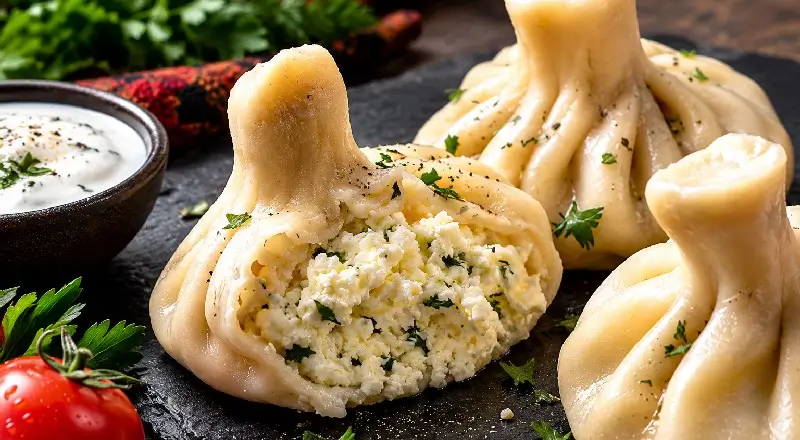
The most common fillings are beef and pork (classic), lamb (mountain style), cheese (a vegetarian favorite), and mushroom (popular in autumn). Some restaurants also offer potato, pumpkin, or even fish versions.
Fried Khinkali
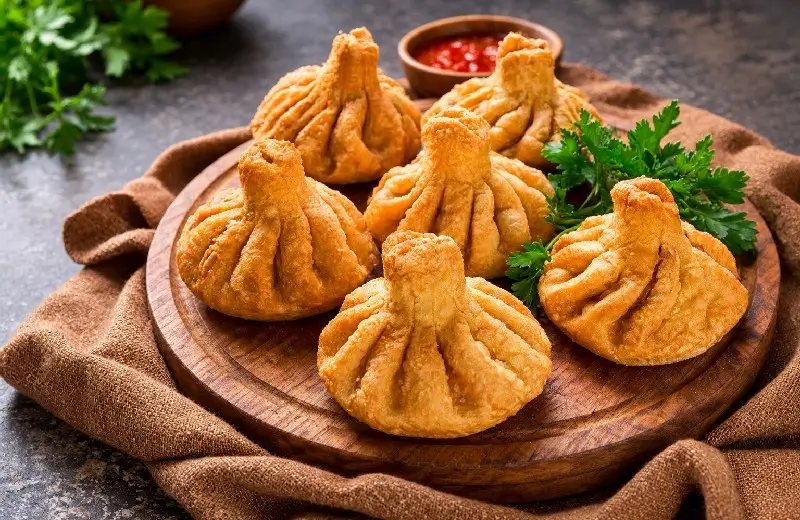
A modern twist — khinkali that is pan-fried instead of boiled. The result is a crispy exterior with the same juicy filling inside. Not traditional, but increasingly popular in Tbilisi restaurants.
Where to Try Khinkali
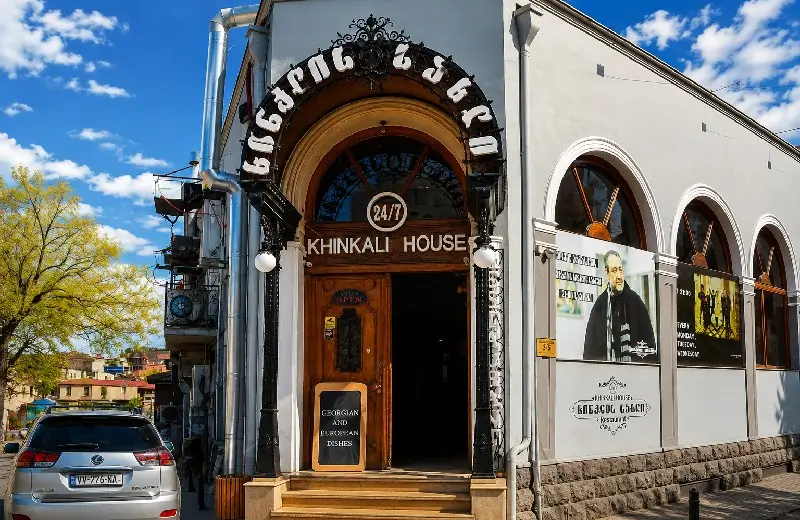
Traditional Restaurants in Tbilisi
The capital has dozens of khinkali restaurants, from old-school institutions to modern spots. Look for places that make them fresh to order — the dough should be soft and the broth hot. See our Tbilisi travel guide for the best neighborhoods to eat in.
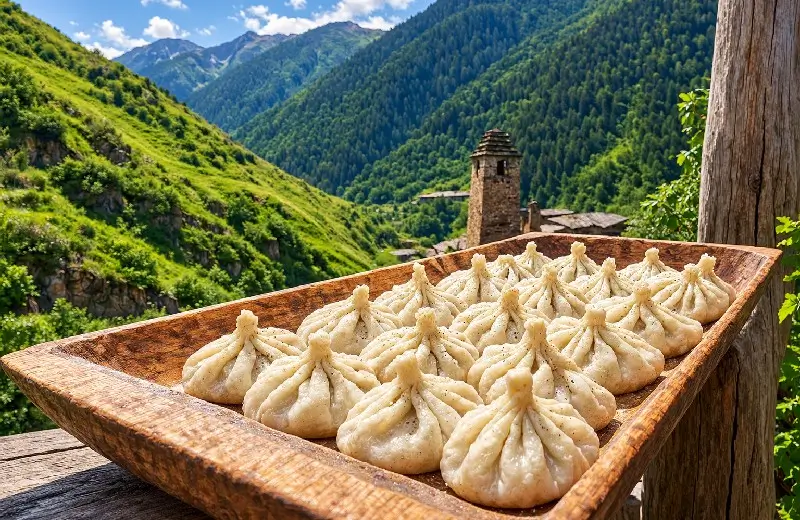
Mountain Restaurants in Kazbegi
In the mountain regions, khinkali is often made with local lamb or beef and served in small family-run guesthouses. The flavor is different from the city — simpler, richer, and often better. See our Kazbegi travel guide for where to eat.
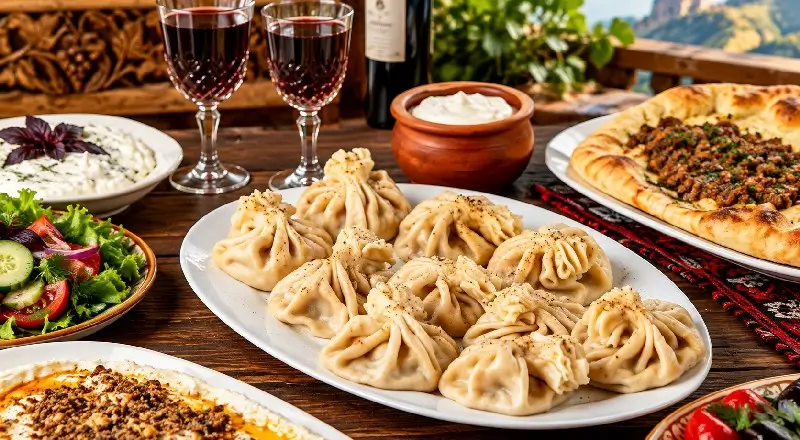
With Wine or Chacha
Khinkali is traditionally eaten with red wine — especially Saperavi — or with chacha, the strong Georgian grape brandy. The combination of hot, savory dumplings and a glass of local wine is one of the great food experiences in the Caucasus.
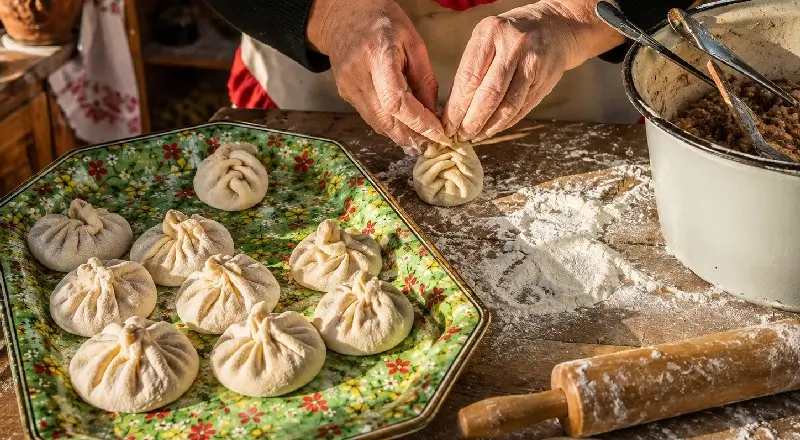
Family Guesthouses
For the most authentic experience, stay in a family guesthouse in Kazbegi, Svaneti, or a small Kakheti village. Many hosts will invite you into the kitchen to help make khinkali — and that meal will be one of the best of your trip.
Khinkali in Different Regions
Khinkali changes as you travel across Georgia. The basic recipe is the same, but the filling, the size, and the way it is served vary from region to region. Here are the most distinctive versions you will find.
Mountain Khinkali (Svaneti & Khevsureti)
The original khinkali comes from the high Caucasus. In Svaneti and Khevsureti, khinkali is traditionally made with lamb, and the dough is often a little thicker to survive the long cooking time. The filling is seasoned with wild herbs and sometimes includes local cheese. In the mountains, khinkali is a winter dish — hearty, warming, and designed to feed a family after a long day outside.
Tbilisi Khinkali
In the capital, khinkali has evolved into a restaurant dish. The dough is thinner, the filling is more refined, and the seasoning is often lighter. Many Tbilisi restaurants offer creative versions — cheese, mushroom, pumpkin, or even seafood — alongside the classic meat version. The presentation is more polished, but the taste is still unmistakably Georgian.
Kakheti Khinkali
In the wine region of Kakheti, khinkali is often served alongside local wine and cheese. The filling tends to be simpler — usually beef or pork with onions — and the focus is on the pairing with the wine. Some family wineries in the region offer khinkali as part of their tasting menus, making it a natural part of a wine tour.
Making Khinkali at Home
Making khinkali at home is a project, but it is one of the most rewarding dishes to master. The process takes a few hours the first time, but once you have the technique, it becomes faster and more intuitive. Here is a simple overview of what is involved.
The Dough
The dough is made from flour, water, and a pinch of salt. It needs to be kneaded until smooth and elastic, then rested for at least 30 minutes. The resting time is important — it makes the dough easier to roll out thinly without tearing. Once rested, the dough is rolled into a thin sheet and cut into circles about 10–12 cm in diameter.
The Filling
The classic filling is a mix of minced beef and pork, finely chopped onion, and a splash of water or broth to keep it moist. Salt, pepper, and fresh herbs — parsley, cilantro, or dill — are added to taste. Some recipes include a small amount of butter for richness. The filling should be slightly wetter than a typical dumpling filling, because that moisture becomes the broth inside the khinkali.
Assembly and Cooking
Place a spoonful of filling in the center of each dough circle, then bring the edges up and pleat them around the top, twisting to seal. The classic khinkali has around 19 pleats. Boil the finished khinkali in salted water for 10–12 minutes, then serve immediately with black pepper and a glass of red wine. The first few attempts may not look perfect, but the taste will still be worth it.
Essential Tips for Eating Khinkali
Order 5 Per Person
A typical portion is 5 khinkali per person for a light meal, or 7–8 if you are hungry. Khinkali is filling — you can always order more.
Skip the Fork
Khinkali is eaten by hand. Asking for a fork is a small cultural misstep — locals will not mind, but you will miss the ritual.
Add Black Pepper
Black pepper is the traditional accompaniment. Some restaurants also offer a spicy tomato sauce, but purists eat khinkali with pepper only.
Let It Cool Slightly
Khinkali comes out of the pot very hot. Let it rest for a minute before biting — otherwise the broth will burn your mouth.
Hold the Top Firmly
The twisted top is your handle. If you hold it too loosely, the khinkali will fall apart and the broth will spill.
Leave the Top on the Plate
The top — the twisted knot — is not eaten. Leaving the tops on your plate is how locals count how many khinkali you have eaten.
Frequently Asked Questions
Khinkali is a large Georgian dumpling filled with spiced meat and broth, sealed with a twisted top and boiled in water. It is the national dish of Georgia and one of the country's most iconic foods.
Hold the khinkali by the twisted top, take a small bite from the side to release the steam, sip the broth, then eat the rest. The top is not eaten — it is left on the plate. Never use a fork and knife.
The classic filling is a mix of minced beef and pork with onion, herbs, and spices. Other common fillings include lamb, cheese, mushroom, and potato. The filling is raw when the dumpling is assembled, and it cooks into a rich broth inside the dough.
A typical portion is 5 khinkali per person for a light meal, or 7–8 for a full meal. Khinkali is quite filling, so it is better to start with 5 and order more if you are still hungry.
Yes — khinkali is made from simple ingredients (flour, water, salt, minced meat, onion, and herbs). The technique takes practice, especially the pleating and sealing, but the result is worth the effort. The dough needs to be rested for at least 30 minutes before rolling.
Ready to Try Khinkali in Georgia?
Book a food tour or find the perfect restaurant for your Georgian food adventure.
Explore Georgia Tours Read the Tbilisi Guide